

You can find PART 1 of this story here.
One of the more entertaining bear encounters I can share involved both Kris and I during a visit to Yosemite National Park in 2007. We’d reserved a tent cabin at Curry Village in the valley. After checking in, we went off exploring for the day, the weather blissfully perfect.
It got dark on us when we returned, and I was surprised to see how quiet the place had become. Not a soul in sight. We each popped into a restroom to brush teeth and all, and somehow Kris came back out before me. It’s usually the other way around. When she didn’t see me, she thought, well the creep must have already walked back to the tent cabin. She started that way with a small flashlight.
Looking ahead, she noticed two beady little lights by a tree. Then two more beady little lights below. She quickly realized these were the eyes of animals in the dark. In the same moment, a sow huffed and lunged right toward her. And right there with mama bear was a cub. Kris calmly walked backwards, wondering out loud where I was. She reached the restroom just as I was just coming out, and proceeded to tell me what had happened. She was rightly proud for not freaking out.
We walked the same path together, that being the only way back to our tent cabin. And sure enough, the bear charged us both this time. A bluff charge. Of course, we backed off. We’re right back at the restroom again where there’s a modicum of light. Hmm. Now what to do?
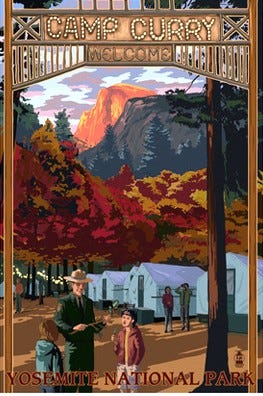
The next thing we hear is a guy coming down a hill on a bicycle and crashing into something a couple of tents away from us. We walk up to see what happened and find that he’d just gotten off work and was apparently bicycling home by braille. He seemed okay, so we explained our predicament and desire to get to our bear-icaded tent cabin. We asked if he knew of anyone who could assist. Fortunately, he carried a radio and called someone to help us out.
Next, a very petite young woman shows up wearing a parkie uniform, with a radio in her hand. She offers a quick hello, then immediately takes off after the bears. In the dimly lit areas we see her running and hollering toward the sow. The sow and cub are running up one direction between tent cabins, the young parkie right on their tail. Then the bears are running down the next aisle, our Ms. Bear Lady still chasing and yelling after them. This goes on a for a bit, back and forth, and we’re almost hysterical watching it all.
As it happened, this young woman is from Nebraska. It’s her first summer season in Yosemite. I’m thinking she might be five feet tall, and her job is to chase the bears out of Curry Village. What a trooper! She was absolutely fearless. And that mama bear was no match for her grit, or her gait. The bears finally exited the area.
Another wildlife person showed up and explained that this sow had been hanging around and wasn’t really a serious threat to anyone. They’d been trying to chase her off for a while, but it was looking like mama and cub would need to be relocated. She was kind enough to walk us to our tent cabin, and all was well from there.
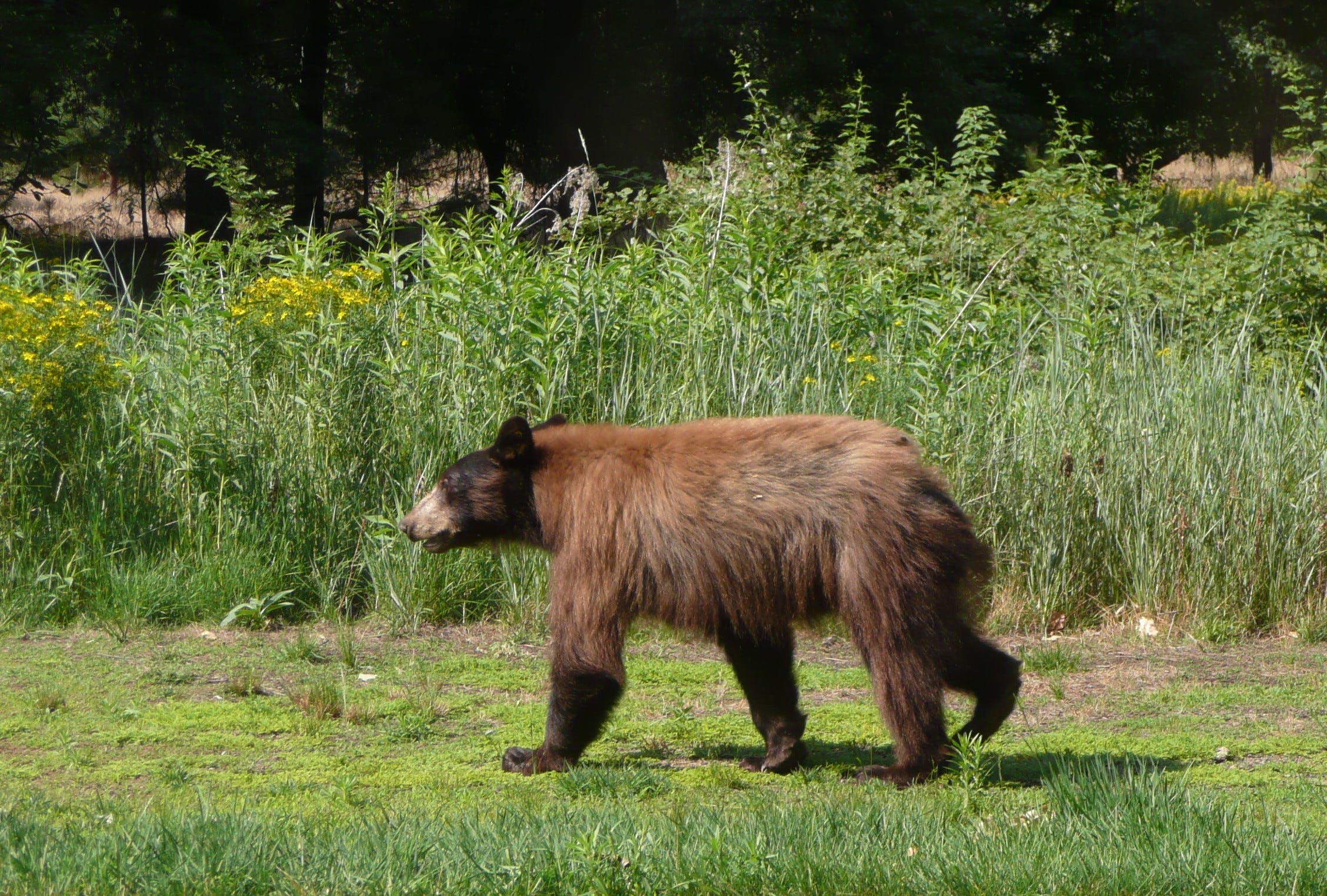
Over the next couple of days, we saw at least five more bears, though none in Curry Village. We backpacked for a couple of days out near Half Dome and saw a bear close to camp and another along the river. When we returned to the Valley, we camped on the lawn at the special backpackers camp area. A bright light outside the restroom lit up the tent, and although it was somewhat annoying on the inside, we had to laugh when the enlarged silhouette of a bear shadow passed like a cartoon across the lit-up side of our tent.
In the morning, we enjoyed breakfast at the majestic Ahwahnee Hotel, and sure enough, watched through the big windows as a beautiful cinnamon bear sauntered by just steps away. This was our seventh bear in four days. I’d worried a little beforehand that Kris might be rattled by all the bears. As it turned out, I think she enjoyed them as much as I did. They added a meaningful dimension to the trip—and a couple of good stories to, ahem, curry back home.
Okay, one more story. About those grizzlies . . .
Just before my ten-year high school reunion, an old friend managed to track me down in the tiny hamlet of Alger, Washington. After graduating, Jeff and I had shared a memorable five-day motorcycle adventure down the West Coast to Fillmore, California, to visit my older brother. (On the same trip, I also met my dad for the first time, a story shared in Finding Destiner.) I stayed on in Fillmore and Jeff returned on his own. Although I returned to Washington the next spring, we’d already fallen out of touch—until he found me in Alger.
I was living on the cheap, renting a room in a small cabin while attending the university in Bellingham. It was a pretty good deal. No heat, but only sixty dollars per month. It also came with a two-holer outhouse in the front yard, which I could never quite get my head around.
Rekindling our old friendship in 1981, Jeff and I went skiing together in Banff that winter, then enjoyed a bit of hiking over the summer. One of our treks was to the Thornton Lakes area of North Cascades National Park, on a lovely day in September. We topped out on the ridge above the lakes and took a little break. I dropped my daypack on the trail and we moseyed along the ridge chatting and checking out the view.
Before long, I realized we had walked quite a distance in the direction of Trappers Peak. I’d been to the summit before and recalled it being a short, easy scramble. Since it seemed we were halfway there already, I suggested we just go on up. So we did. The berries were prime and we grazed while we hiked. My thought was to be quick about it, before some animal started tearing into that pack I’d left behind.
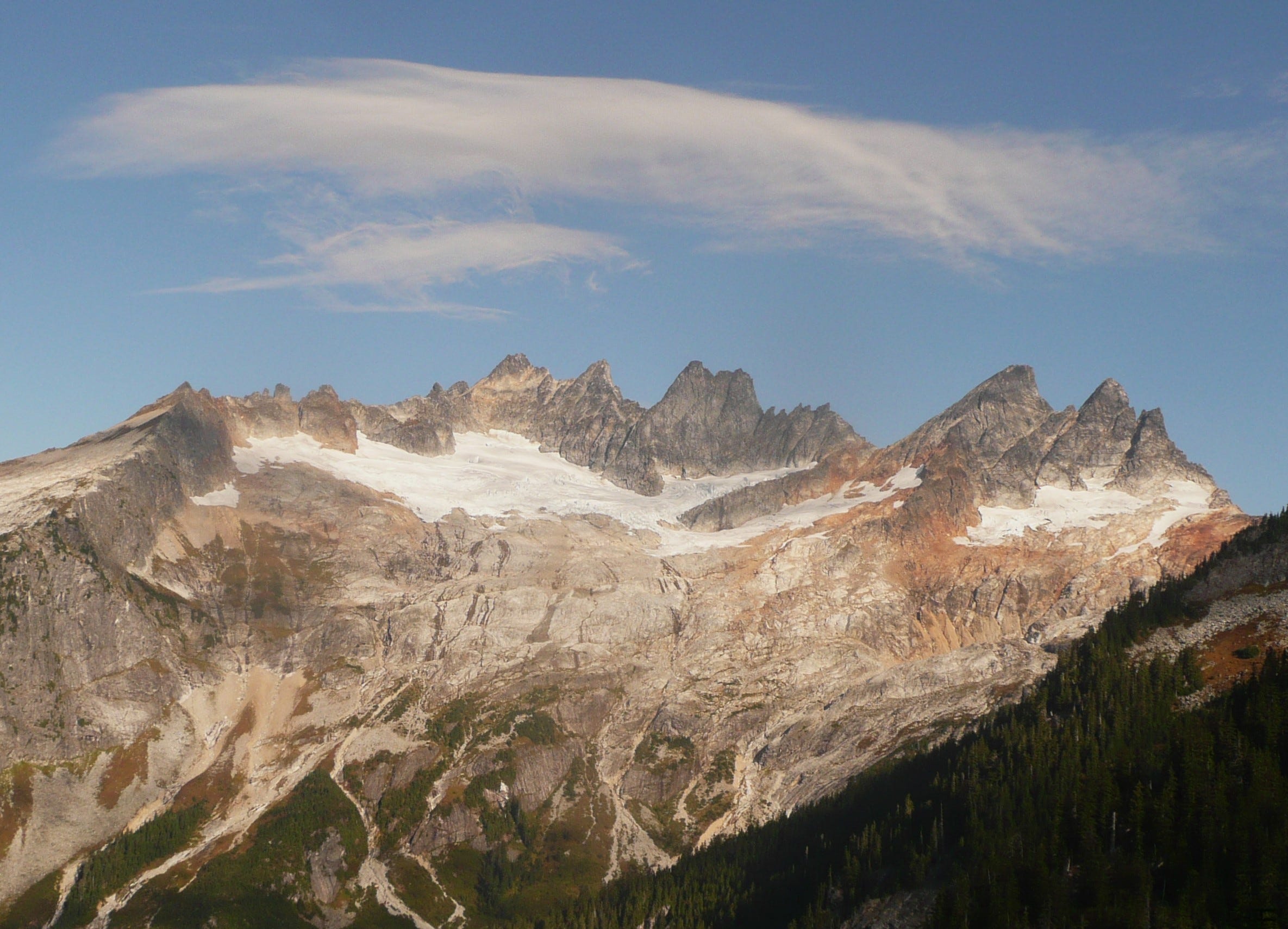
Perched on top, we had a raven’s-eye view of the expansive wild country all around us, including the lakes, Mount Triumph and the dramatic spires of the Picket Range. It was impossible to leave in any haste, so we soaked it in a while, perhaps an hour.
On the way back down, there were steep drop-offs to our right, less steep meadows to our left, where most of the good berries were. We were maybe halfway back to my pack, when we stepped over a gentle rise. At the same moment, two good-sized bears stood up on their hind legs, not more than twenty or thirty yards away, and looked directly at us, motionless.
To this point in my life, I hadn’t seen that many bears in the wild, but these guys were different. They seemed to be two-toned, lighter underneath, with plump legs and big, round, teddy-bear faces. They looked bigger than any black bears I’d seen, but they also looked young, with that cuteish look you might associate with a younger mammal. Could they be grizzlies? I’d read somewhere that grizzlies were extremely rare or even non-existent in the North Cascades, and that the chances of seeing one were close to nil.
We all stood there calmly, us and the bears, as if we needed time to figure each other out. I whispered to Jeff to get his camera, which he’d stuffed in his pack when we left the summit. Crazy me, I didn’t even bring one. He slowly removed his pack, but before he could open it up, the bears dropped to all fours and scurried down the meadow and out of sight. I’m sure the entire scene lasted well under a minute, though it felt as if time had stopped altogether.
Stunned by the close encounter, we caught our breath and continued down the trail. Not more than ten minutes later, we met up with a large black bear slowly lumbering across the trail in front of us. This bear, a rotund adult, appeared nothing like the two we’d just left minutes before. Not just color-wise, but the profile seemed different, the head, the snout, the ears, the lack of interest in us.
Minutes later, we rounded a bend to see another, smaller black bear sniffing at my pack. There wasn’t much of anything edible inside of it, but it was kinda irresponsible of me to have left it there so long. As we approached, the bear glanced toward us then simply walked into the shadow of a tree next to the trail, as if to wait for us to pass by. We did pass by and I gracefully scooped up the pack and we picked up the pace. Four bears at close range in under a quarter-hour was plenty of excitement for this crew.
Some months later, I attended a talk by a prominent bear biologist in the region. He reminded us that North Cascades grizzlies had been declared an endangered species in 1980, with few if any still surviving. Afterward, I shared our experience with him.
He asked me a few questions, not all of which I could answer with full confidence, including whether I’d noticed a shoulder hump. No, we just saw their faces and underbellies before they ran off. We didn’t really get much of a side-view profile. How about the claws? I kinda thought there were longish claws, but that hadn’t really registered. I kicked myself for not taking a closer look at those front paws when we had the chance. Long claws can help with identification.
By the end of our brief conversation, he surmised that we had probably seen a couple of young grizzly siblings. We should savor it, he said. Wow. With that, I became absolutely-probably confident we had run into . . . well, a couple of bears that might have been grizzlies. When I look at photos of the faces of the two species side by side, the grizz perfectly matches the round faces I remember on Trappers Peak. The two black bears we saw were noticeably different, and we had the added benefit of comparing them in real time.
As the years have progressed, the biologists have learned a bit more about grizzly bears in the North Cascades. There are likely to be a few out there, maybe twenty or perhaps only as many as you can count on one hand. Or they might just be the occasional visitor from the Canadian side of the border. Most that roamed here in the more distant past, were killed off by prospectors and hunters, even bounty hunters.
The last confirmed sighting was 28 years ago, although a credible, if inconclusive, photograph of a grizzly was taken by a hiker near Glacier Peak in October 2010. The photo does support the notion that a few grizzlies do live in the North Cascades, and that they aren’t all just stragglers from Canada.
Scientists say there’s plenty of suitable habitat out there to support a sustainable grizzly population, and efforts are underway to try to do something meaningful in that regard. The leading idea (described in a draft EIS issued last year) is to relocate a few bears from interior British Columbia or the Montana Rockies, with the goal of establishing a baseline population of 25 or 30 bears, that could potentially increase to a more sustainable population of around 200 bears over the next 60 to 100 years.
Of course, there’s been a certain amount of hysteria expressed over the idea of bringing grizzlies back to the North Cascades. But given the great size of the landscape, bear density would remain so low that it would still be unlikely for an avid hiker like me to ever see one. (By comparison, Washington state is home to 25,000 black bears.) A thoughtful recovery strategy based on good science and flexible management may offer some hope for their long-term survival.
A final thought on bear spray:
To this day, I have never carried bear spray. But I’m reconsidering. With that one possible exception way back in the ‘80s, all of my bear encounters have been with black bears, a hundred or more over the years. I’ve logged thousands of miles of solo hiking where I know black bears are around, and invariably, the bears have shown no interest in me. Typically they just put me on ignore or they turn and run. Most veteran hikers would probably agree. If you follow the rules, it’s fairly easy not to worry.
That’s not to say bears are predictable. Conflicts can and do occur, although there has only been a single fatal attack by a bear in Washington state (a young girl in 1974). We should always show them respect. They have bigger canines than I do, and mine are pretty good size. So make noise, give them space, hike with a friend, hang your food when camping. Et cetera. (See below for more info on bear safety.)
However, the recent focus on grizzly bear recovery in the North Cascades, my own backyard wilderness, has me rethinking my take on bear spray. If I’m willing to take all of the usual precautions already, could I add one more tool to the box? Couldn’t I at least carry bear spray when I’m hiking alone in remote areas? That seems fairly doable. Like wearing a seat belt. Not a guarantee, though it does improve the odds should a bad thing happen. And it can also work on cougars or even a mean dog, for that matter.
And its not just about me, right? If I don’t have bear spray and a bear or cougar comes after me, as unlikely as that may be, and takes a chunk out of my leg or worse, the animal could immediately be labeled a “problem bear” (or cougar) and may be as good as dead. Wildlife managers simply can’t tolerate an incident like that when part of their job is keeping the public safe. I’d rather not be that guy.
So here’s my New Year’s pledge: I will at least try to carry bear spray when I’m hiking alone in remote areas, spring through fall. In grizz country, I’m unlikely to be hiking alone in remote areas anyway, but will be sure at least someone in the group has bear spray.
There, I done it. I turned over a new leaf.
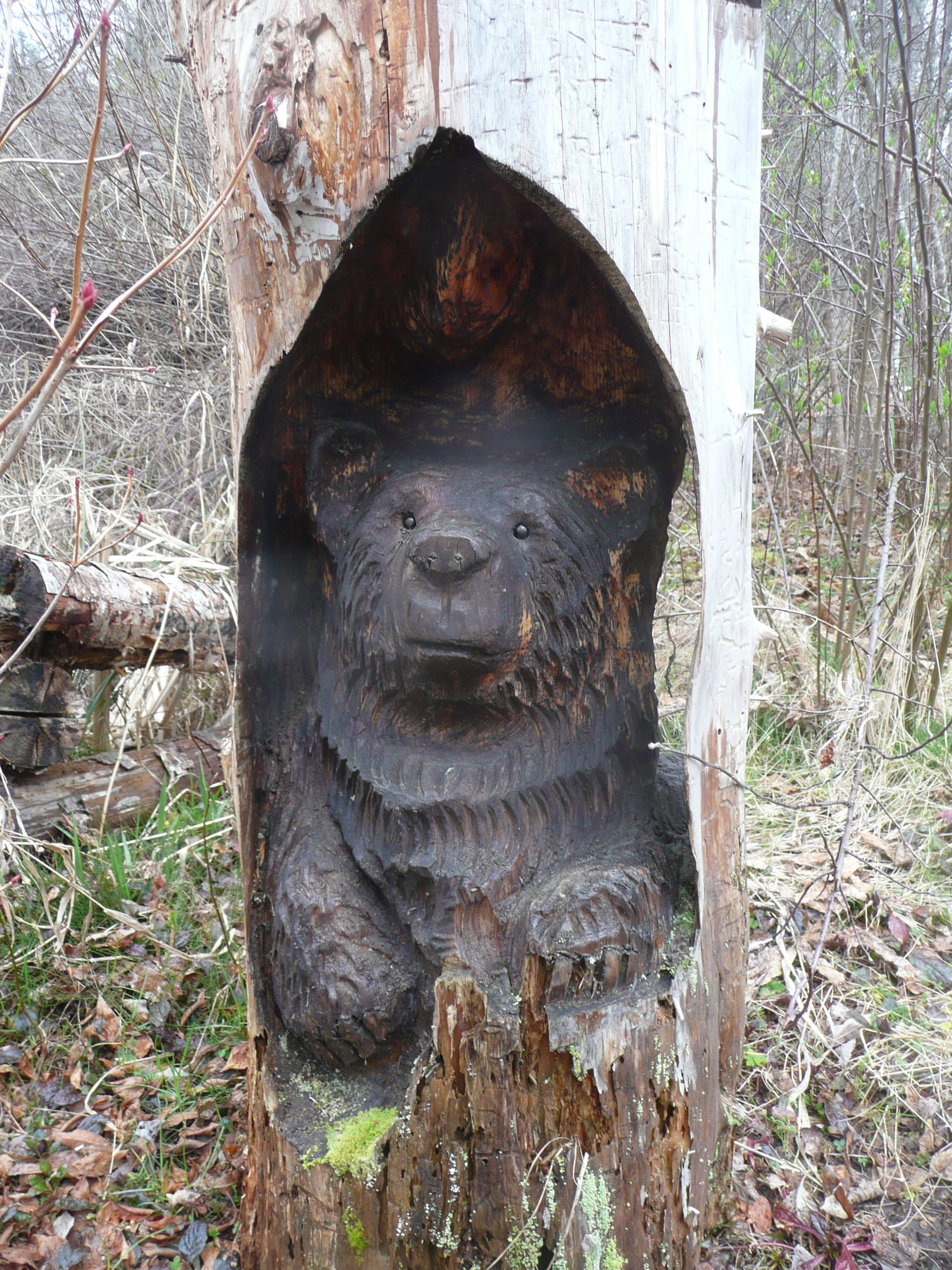
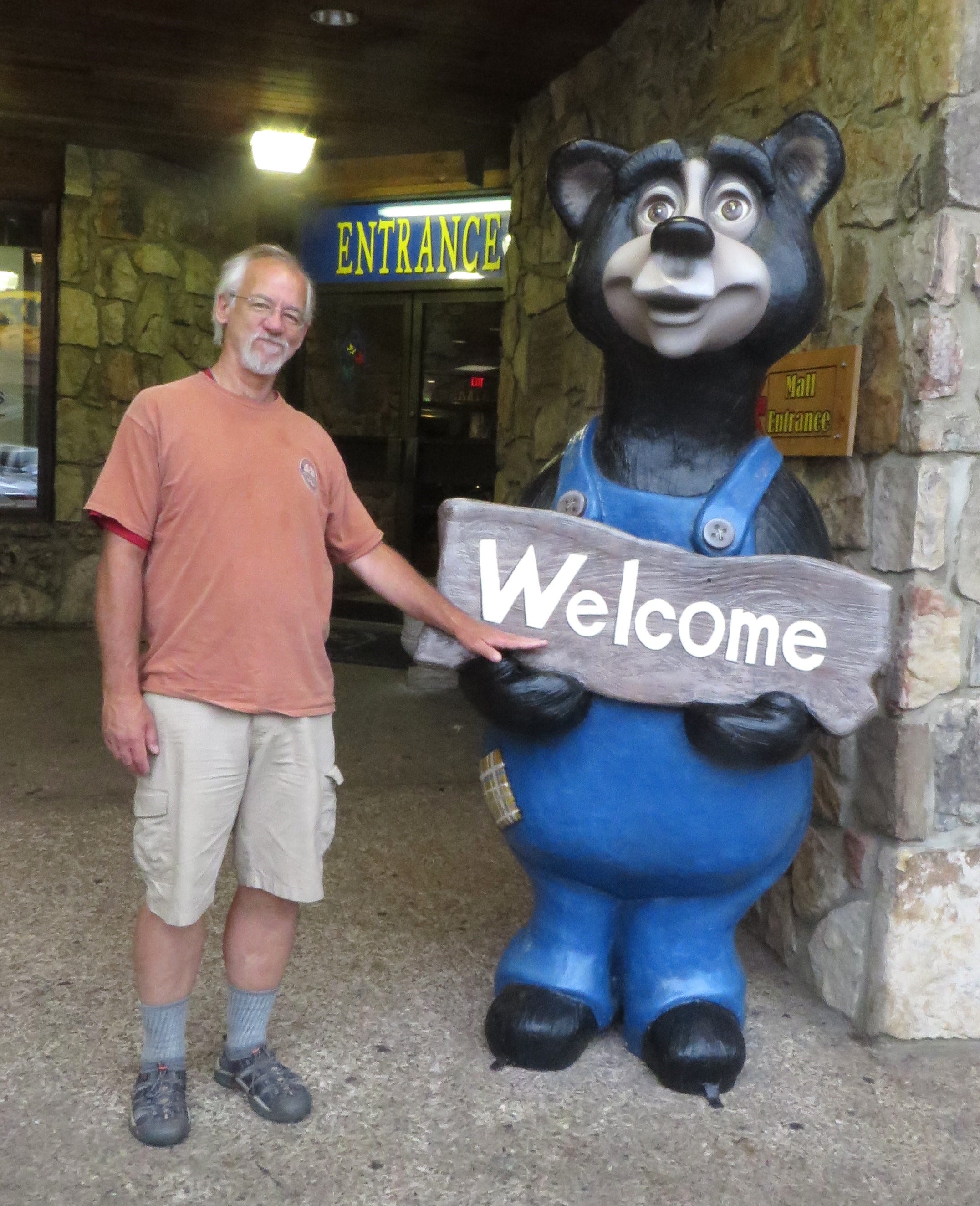
I suppose, alternatively, I could just go hang out with these guys:
Here’s a great YouTube video for how to use bear spray, from Montana Fish, Wildlife & Parks.
For more info on North Cascades grizzly recovery, check out this article at Crosscut.
If that’s not geeky enough, you can read up on the proposed grizz recovery plan and EIS process here. A final EIS and decision are pending.
To be bear safe and bear aware, see:
U.S. Forest Service, Be Bear Aware
Be Bear Aware Campaign
And finally, what to you call a bear who’s missing an ear? B.