

In my new mountain memoir, Boots on Fire, I share the story of meeting the legendary forest ranger, Harold Engles in 1982 near the summit of Whitehorse Mountain outside Darrington, Washington. The memory recrystallized this week while I was digging through a bunch of boxes in “das Boekhaus,” a small backyard “shed” where I store all my hiking books.
I was looking for an old sail for the boat, which eventually revealed itself buried at the back wall. But in the process, I also discovered an unfamiliar box of goodies that was taped shut and almost levitating. On the outside a scribble read “Ken’s photos and cards.” It was one of many boxes we’d stashed away when we moved to Washington, D.C., where I’d taken a job back in 2011. We returned to Bellingham in 2019. I thought I’d rummaged through all the boxes in the years since, but apparently I missed one.
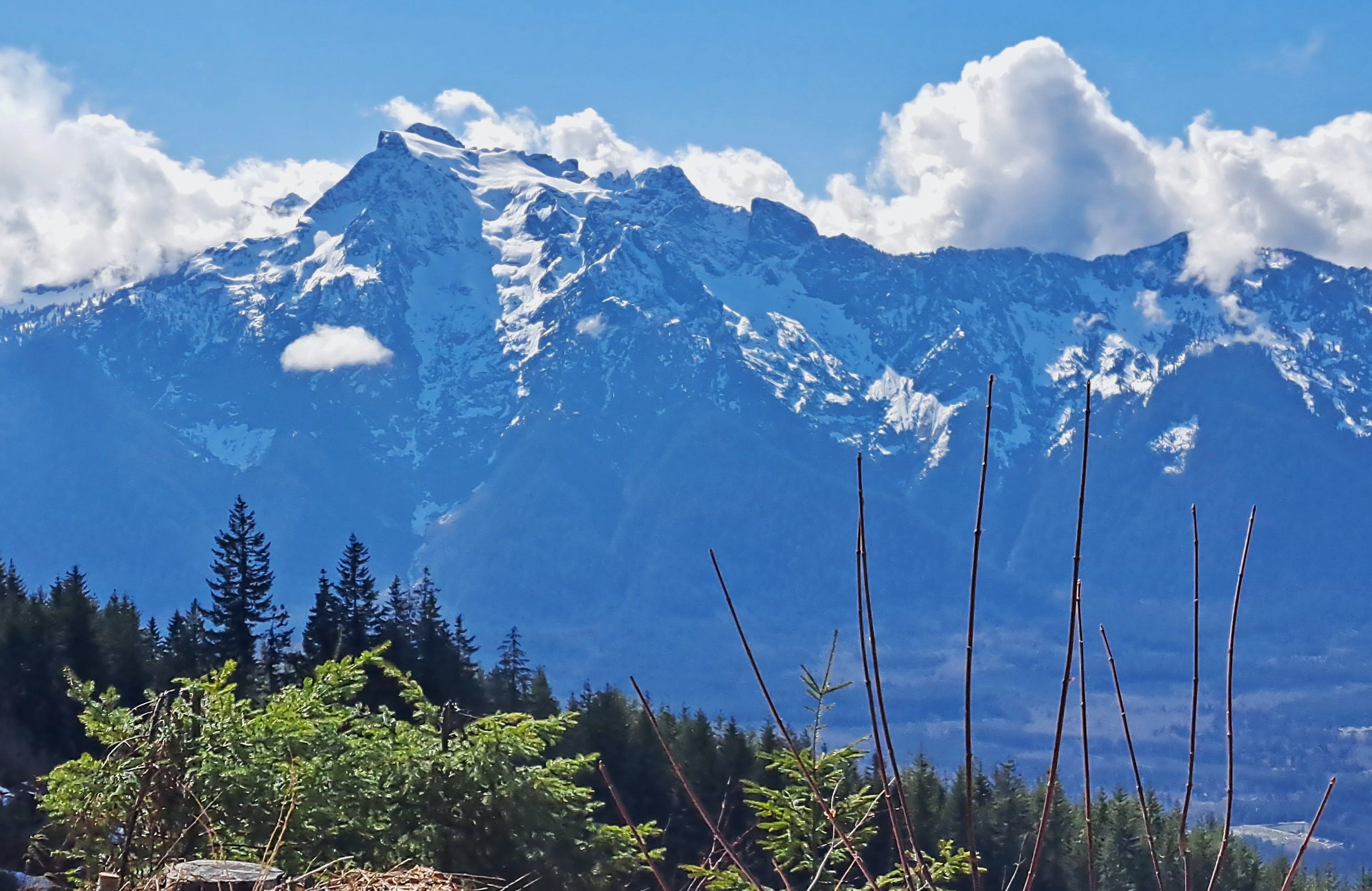
The box begged me to look inside. I peeled away the tape and opened it up. It held many treasures: my high school yearbooks, photos from climbs in the North Cascades and travels to Mexico, the contract for when I bought my house in 1983, and even a first-issue, stamped envelope from my grandmother marking the July 4, 1986 centennial of the Statue of Liberty. There were cards and letters from family and friends—and two handwritten letters from Harold Engles.
In the early 1980s, having fallen headlong into the joys of mountaineering, I began reading a bit of local mountain history. Several times I came across the name Harold Engles. I presumed he was some colorful figure from days gone by. After all, he’d arrived in Darrington in 1927, by way of Oregon and Montana, to serve as area ranger for the Forest Service.
This was a time when the grinding wheels of railroad logging had begun to rapidly decimate the giant old trees that still filled much of the river valleys of the Sauk River and its pristine tributaries. While managing federal timber sales, the ranger’s primary tasks also included chasing away the poachers, building trails and watching for fires. Engles labored right alongside the crews.
For a couple of budding mountaineers like Jack and me, Whitehorse Mountain was a commanding objective, rising precipitously more than 6,000 feet above downtown Darrington. We headed upward on a cool, cloudy, early-season morning, chugging up the endless “trail” to Lone Tree Pass, a mere 4,200 feet above town. Crossing meadow and snowfields, we soon reached High Pass, a comfortable saddle just before climbers normally rope up to cross the upper So-Bahli-Alhi Glacier and scramble up the summit rocks.
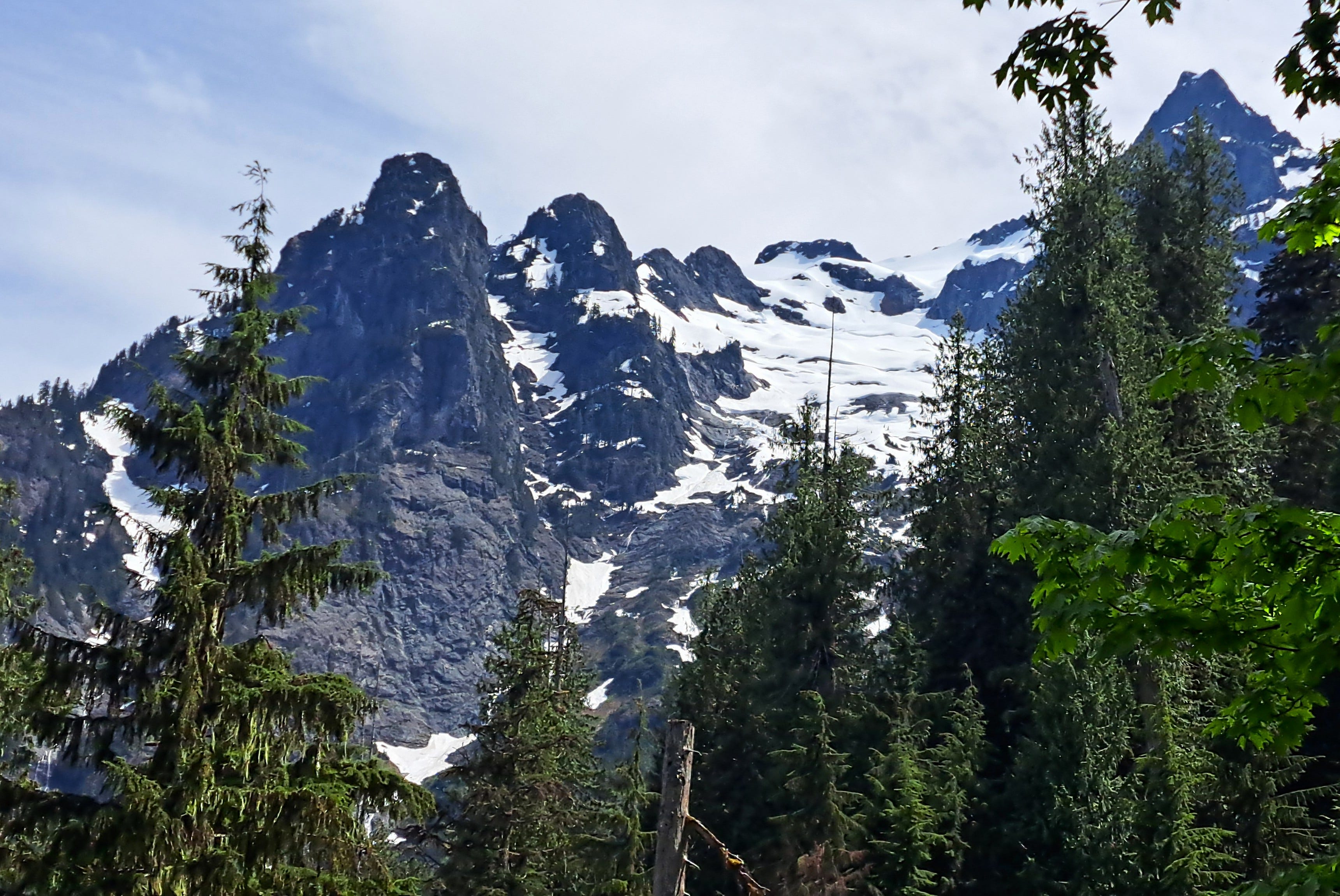
While enjoying a good rest, Jack and I noticed four older gentlemen below making their way up the steep snowfield. Curiously, they were carrying alpenstocks, long skinny poles that climbers in the past would jam vertically in the snow as they climbed, instead of the fancy engineered ice axes that we carried. The foursome soon met up with us at High Pass.
One of the men called to another, “Hey Harold, c’mon over here. I’ve got a spot for you.”
“Did you say Harold?” I asked.
“Yep, that’s Harold. Harold Engles!”
I was floored to learn that the old guy next to me and now rolling around in the snow at 6,000 feet on a chilly, overcast day with his shirt off, was in fact Engles.
“Invigorating!” he chortled.
Engles was climbing Whitehorse Mountain with a few friends for the umpteenth time, this time in a slightly premature celebration of his 80th birthday. We chatted briefly, though I was more or less speechless in such esteemed company.
A true mountain man and local legend, Engles had served as forest ranger in Darrington for decades. He built campgrounds and fire lookouts, cleared trails and managed the timber harvest. He was known to hike 40 miles in a day. A particularly awesome story is told of him and his also legendary sidekick, Harry Bedal, humping up trailless Three Fingers Mountain on a crummy day in October 1929 to see if the summit might support a new fire lookout.
Against their better judgement, the pair decided that the highest pinnacle of Three Fingers Mountain, a few miles south of Whitehorse, would be a fine place to construct a new lookout. The following summer, work began by dynamiting the pointy summit to create a platform for the building. After a couple of summers of creative effort, including a new trail and tramway to bring up the materials, the work was completed.
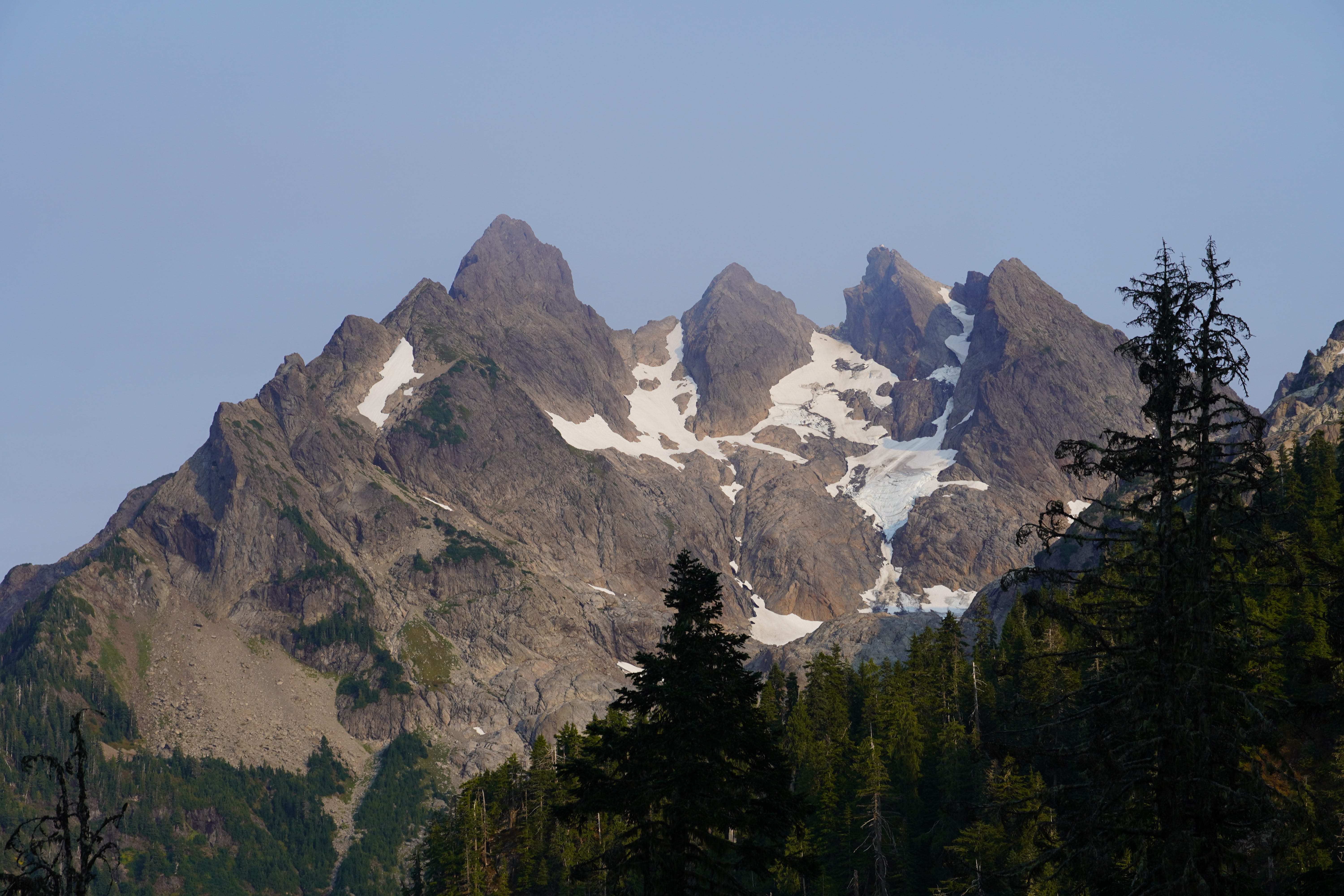
Since the early 1980s, I’ve hiked to the lookout several times, most recently in October 2020, which means I’m overdue to return. It’s a hard hike, hard to get there, and given the views, hard to leave. Perched atop a precipice at just under 7,000 feet, it remains one of the most remarkable fire lookouts ever built. Though abandoned long ago and nearly lost to the elements, it still stands thanks to the many volunteers who’ve restored and maintained the building for the past 40 years.
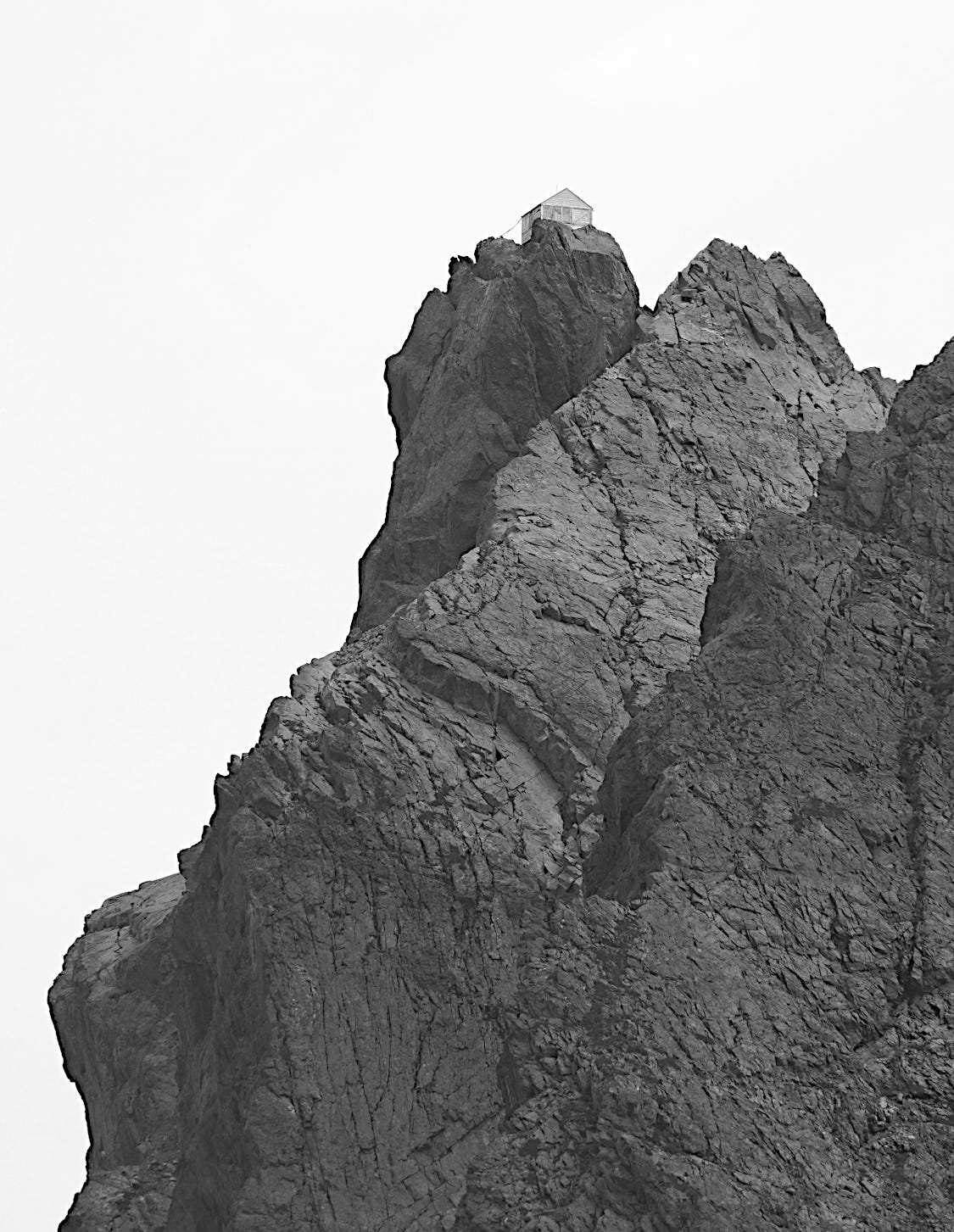
The story of the lookout is superbly told in Three Fingers: The Mountain, the Men and a Lookout, by Malcolm Bates, republished in 2026. I summarized parts of this amazing story, along with my encounter with Engles, in Boots on Fire. Fred Beckey also shares a few historic nuggets in Range of Glaciers: The Exploration and Survey of the Northern Cascade Range. (I describe the route getting there in my guidebook, Hiking Snohomish County, although the arduous and potentially dangerous trek is not recommended for the inexperienced or faint of heart. For something more mellow among giant trees, try the Harold Engles Memorial Cedars Trail along the North Fork Sauk River southeast of Darrington.)
Crossing paths with Engles in 1982 remains one of my most treasured mountain memories. As I wrote in Boots on Fire,
A few years later, I read a story about Engles in Signpost Magazine, a hiking and backpacking publication of the Washington Trails Association. The writer mentioned that the old guy was still climbing mountains. I took the initiative to write him a letter [in May 1985], noting we’d met on Whitehorse and that I’d love to join him for a climb sometime if I wasn’t imposing too much. I knew Engles was a local legend, so I addressed the letter to Harold Engles, Whitehorse Mountain, Darrington WA. I received a quick reply and a friendly invitation to come along on a trek up Three Fingers. Perfect!
The lookout building on Three Fingers was already in sad shape when I received his May 27, 1985 letter. He mentioned that the daughter of Harry Tucker, who’d manned the lookout in 1941-42, would also be coming along.
“She is anxious that something be done to maintain the house,” he wrote. “In order to do this, it will be necessary for a couple of enthusiasts to make a trip up there in advance to check the condition of the house and determine what material we will need to service it. I’ll check around with a few friends who might prefer to go up earlier and they can make up the advance party.”
Notice he said “we.” At 83 years of age, Engles meant to be up there himself working on the lookout along with the others.
“It was real nice hearing from you,” he added. “We would be pleased to have you as a member of the party. I’ll keep you informed.”
I must have mentioned in my letter the Everett Mountaineers’ climbing course I’d completed, since he also wrote,
“Have rubbed shoulders with the Mountaineers for going on 60 years, but never got around to joining, feeling that living in the mtns sort of filled in the need . . . Hiking and climbing still interests me. Along with friends, I managed to climb Mt. Pugh, Whitechuck, Red, Devils Peak, Bald Eagle and a few lesser ones last year, and cancelled out Whitehorse and Three Fingers because of adverse weather. I still do some hiking alone, but no peaks or cross country trips. A mishap could cause concern and great trouble for others.”
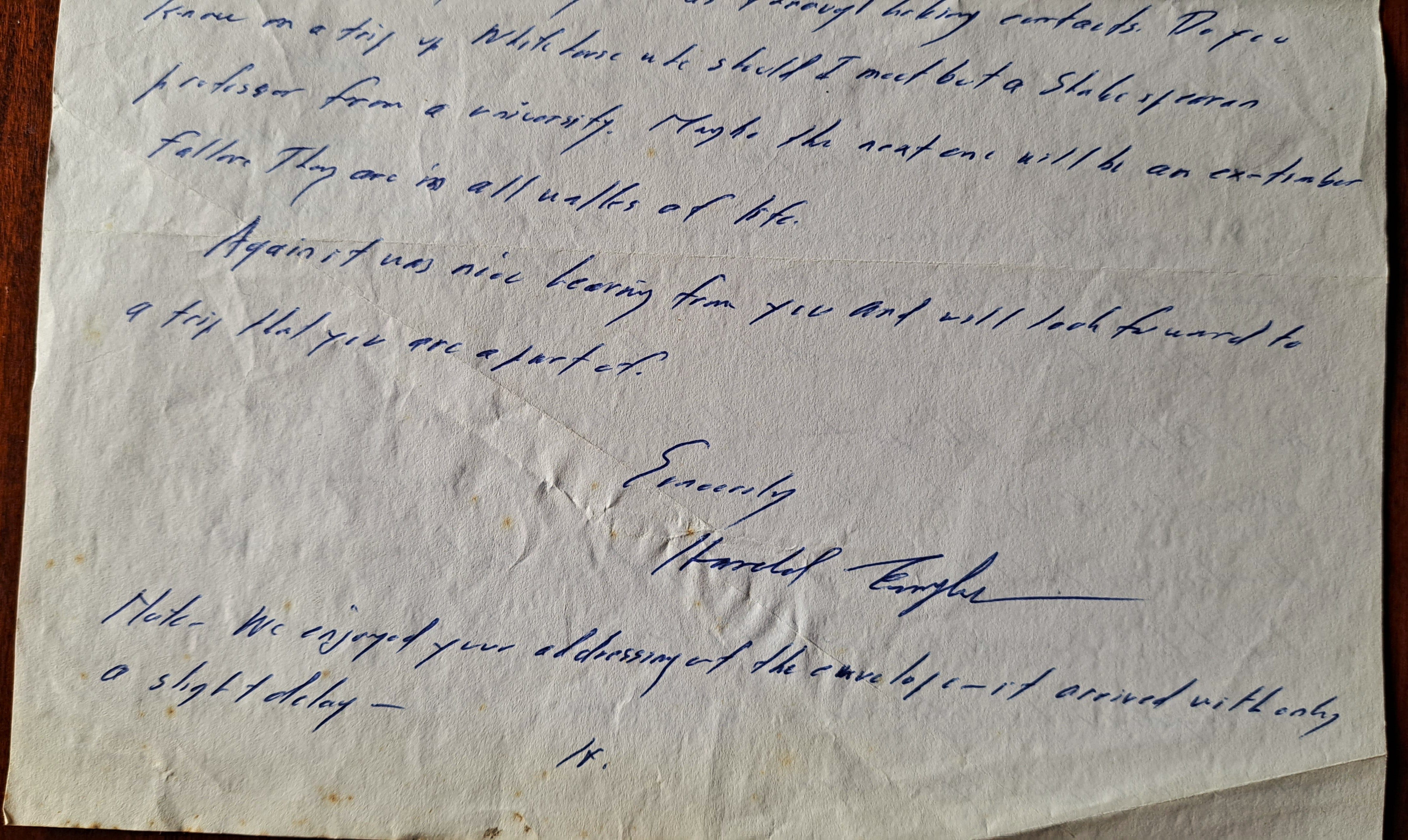
He did keep me informed, writing again at the end of July to say they would be climbing Three Fingers Mountain around August 17-18. I had a standing invitation to join them. I had every intention of going, until Harold called me shortly beforehand to say that he’d hurt his hip on another climb and needed to postpone for a week.
Unfortunately, my sweetie and I had made big plans for a trip far north into British Columbia that would have been ill-advised to break. I told him I’d have to join him another time. Another time never came. My excuse in Boots on Fire:
I was too timid to invite myself a second time, so the whole notion of climbing with Harold just fell by the wayside. In hindsight, I shoulda-coulda made it happen. I learned later that Harold was still climbing at 90.
I can’t really explain why I never followed up. Just one of those shy people things, perhaps. I should have reread his letters for encouragement. Looking back now, I realize he was inviting me into the fold, to join with the project or perhaps be part of the advance party. But clueless me, I went traipsing off to climb other mountains instead.
Nevertheless, the climbing party in 1985 and others that followed and summited Three Fingers, surveyed the poor condition of the lookout, identified the work and materials needed, and enlisted the support of the Everett Mountaineers to help lead the effort. A major restoration of the lookout was completed the following summer, which Bates describes in his book along with the compelling stories of the men and women who served as lookouts.
Thanks to Engles and many others, the building was saved. Just a year later, the Three Fingers Lookout was listed on the National Register of Historic Places.
Engles’ records, photos and oral histories are archived at the University of Washington. You’ll find a 1935 photo of the Darrington Forest Service staff here, including Engles and another legendary mountain man, Nels Bruseth, whom I also write about in my book. We can all thank these mountain brutes for many of the Darrington-area hiking and climbing opportunities we enjoy today.
Will I make it back up Whitehorse Mountain at 80? Hope so, but ask me again after tomorrow’s knee surgery.
Boots on Fire is available here, at our local independent bookstore Village Books, and at Amazon.

.
What a great story about your Harold Engles encounter! Good luck with the knee surgery!
You have better boots than me. jj