Part 2 of a two-part story. Part 1 is here.
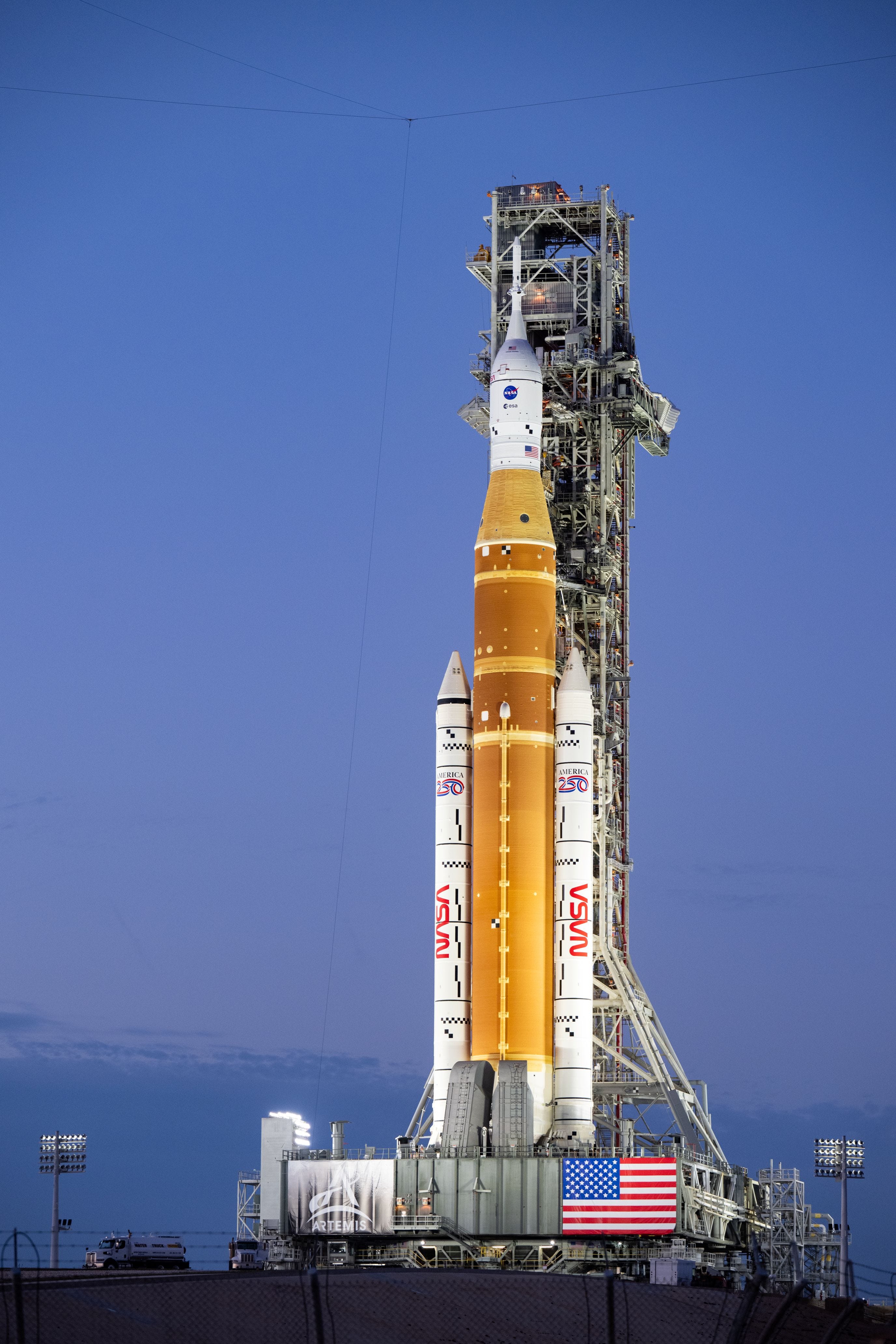
When the 32-story beast finally rolled out of the Vehicle Assembly Building (VAB), things were looking pretty serious. So yes, I was going to the Kennedy Space Center. I invited a friend and fellow space enthusiast, Tom, to join me. He declined, insisting the launch would likely be scrubbed. It’s new technology. Delays are inevitable, he said. It won’t fly for months at least. Besides, he’d already watched several shuttle launches. I hadn’t. I was going regardless, and I wanted the best public view available—the bleachers at the Apollo/Saturn V Center.
The moment the launch viewing tickets were released online, I clicked the buy button. There was a pause, then a pop-up window. It said I was in the queue. Soon I was next in line. Click to the next page, it said, which is when everything froze. I waited 10 minutes. Nothing happened. Nothing else to click on. What do I do? I finally opened a fresh page and when I clicked on the ticket button again I apparently lost my place in the queue! Jeepers! Except I didn’t say jeepers.
I called the customer service line and left a message. Amazingly, I got a call back in 20 minutes. They’d had a computer meltdown with the huge demand for tickets. They saw I was in the queue. I’d get my ticket. Hallelujah.
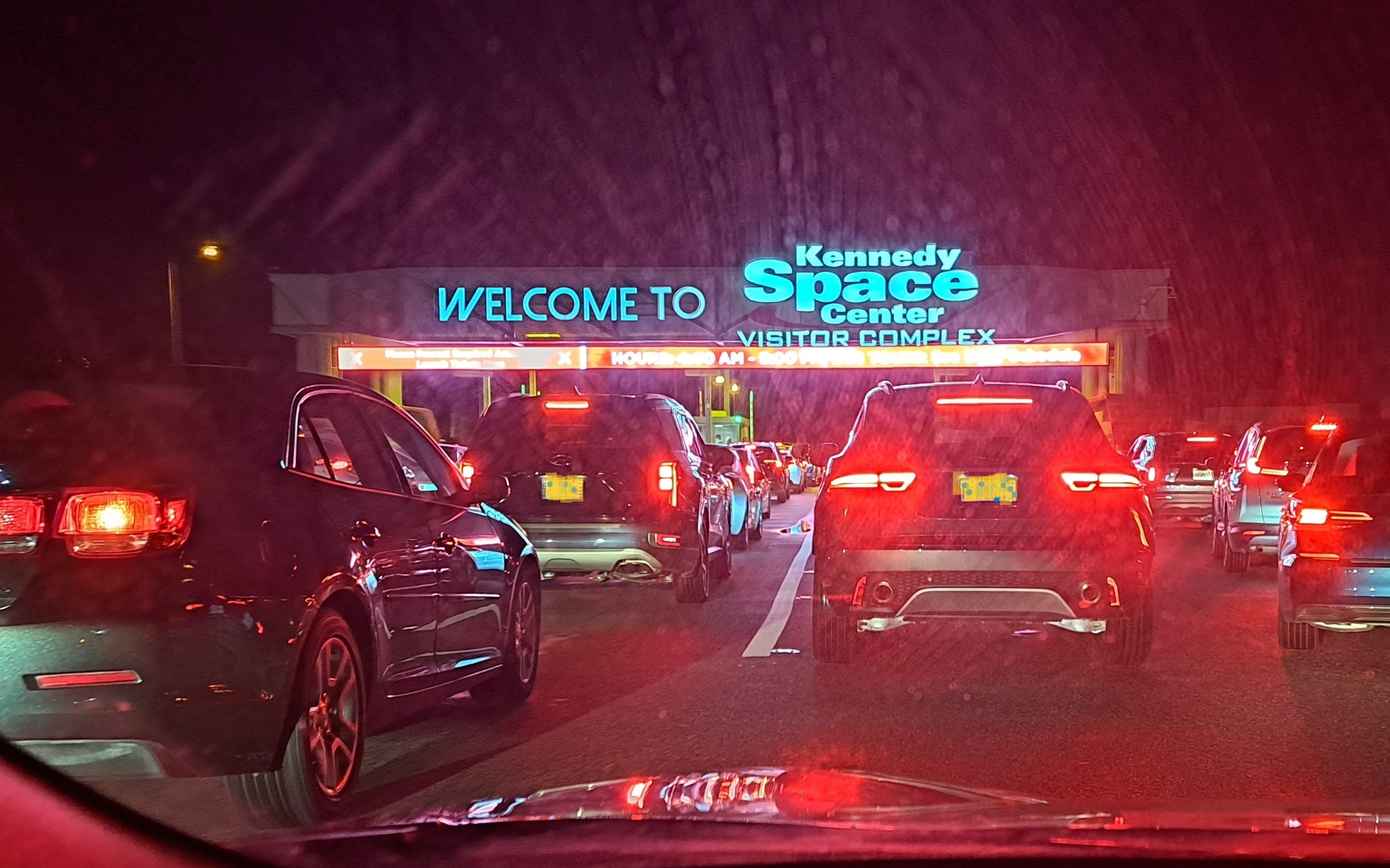
Rob, a friend and NASA retiree, offered a spare room for me in Titusville near the Space Center. I flew to Orlando, snagged a rental car, and settled in for an enjoyable evening meeting some other NASA folks. They advised me to go early, traffic will be crazy. By 4:00 am the next morning, I was in the line of cars outside the Kennedy Space Center waiting for the gates to open. When they did, I was in and parked in a flash. I hustled over to the shuttle busses for the short ride to the Apollo/Saturn V Center.
Though I’d made it a point to be early, the bleachers were already full when my bus unloaded. So I sat on the grass. To the northeast across Banana Creek, the rocket stood under bright lights at Launch Pad 39B, 3.5 miles away. We were treated to a colorful sunrise as we waited for the big event.
Blastoff was scheduled for around 8:30 am. The NASA guy on the public address system had a perfect voice for the job and kept us well apprised. The hydrogen and oxygen tanks were being filled and all was on track. And then it wasn’t. A valve was leaking hydrogen. Only a small amount, but enough to hold things up. A similar leak had cropped up during various tests over the preceding months. We waited and twiddled. Then the news came that the leak was too much. The launch was being scrubbed. Tom was right.
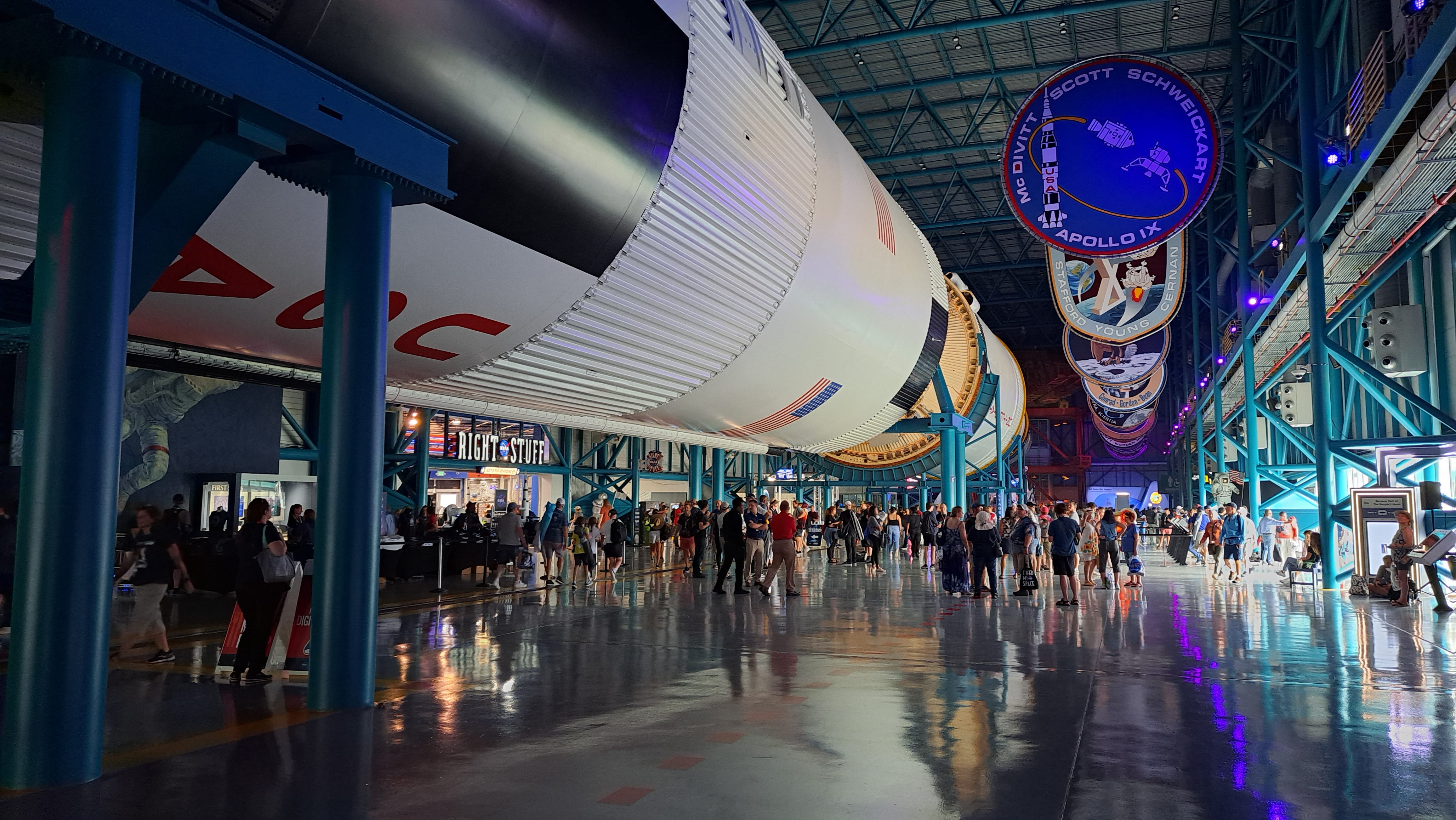
A subset of NASA rocket scientists who majored in leaky valves would investigate the issue and try again in five days. Our tickets would still be honored. In the meantime, I toured the Apollo/Saturn V Center, picking my jaw up off the floor when I saw the full length Saturn V rocket mounted horizontally inside the building. Wowser. The thing is ginormous, and mind boggling to imagine them standing it upright, let alone sending it into space.
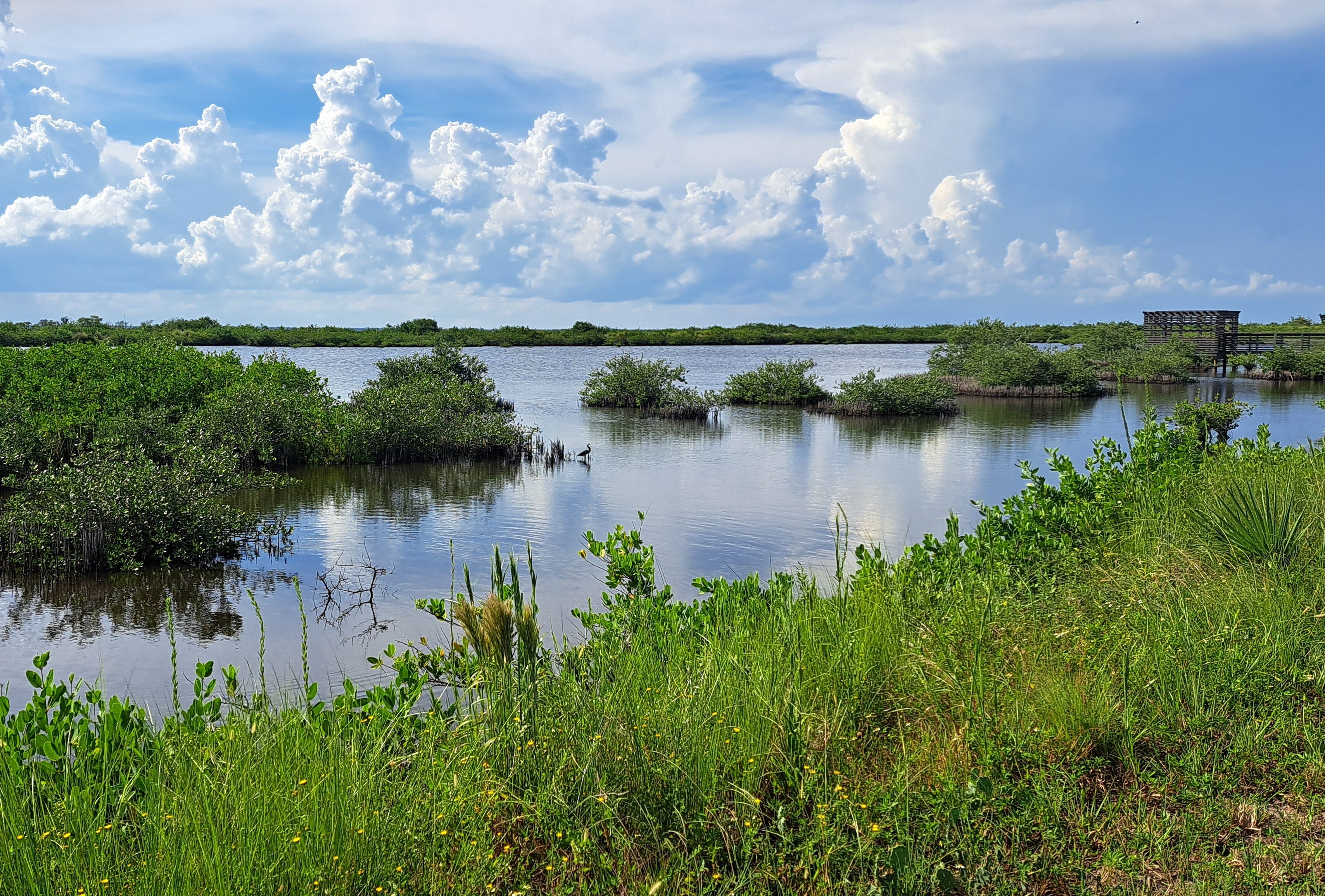
I frittered away the next few days with Rob and his friends, getting acquainted with lovely Titusville, hearing NASA stories, and touring some of the local sights, beaches and wildlife areas from there to Cocoa Beach. We checked out a cute herd of manatees, and I took a walk along a beauteous wetland and waterway with herons, egrets, plenty of alligator habitat, and a first for me, golden silk spiders. At up to six inches across, they’re the largest in Florida. Eek.
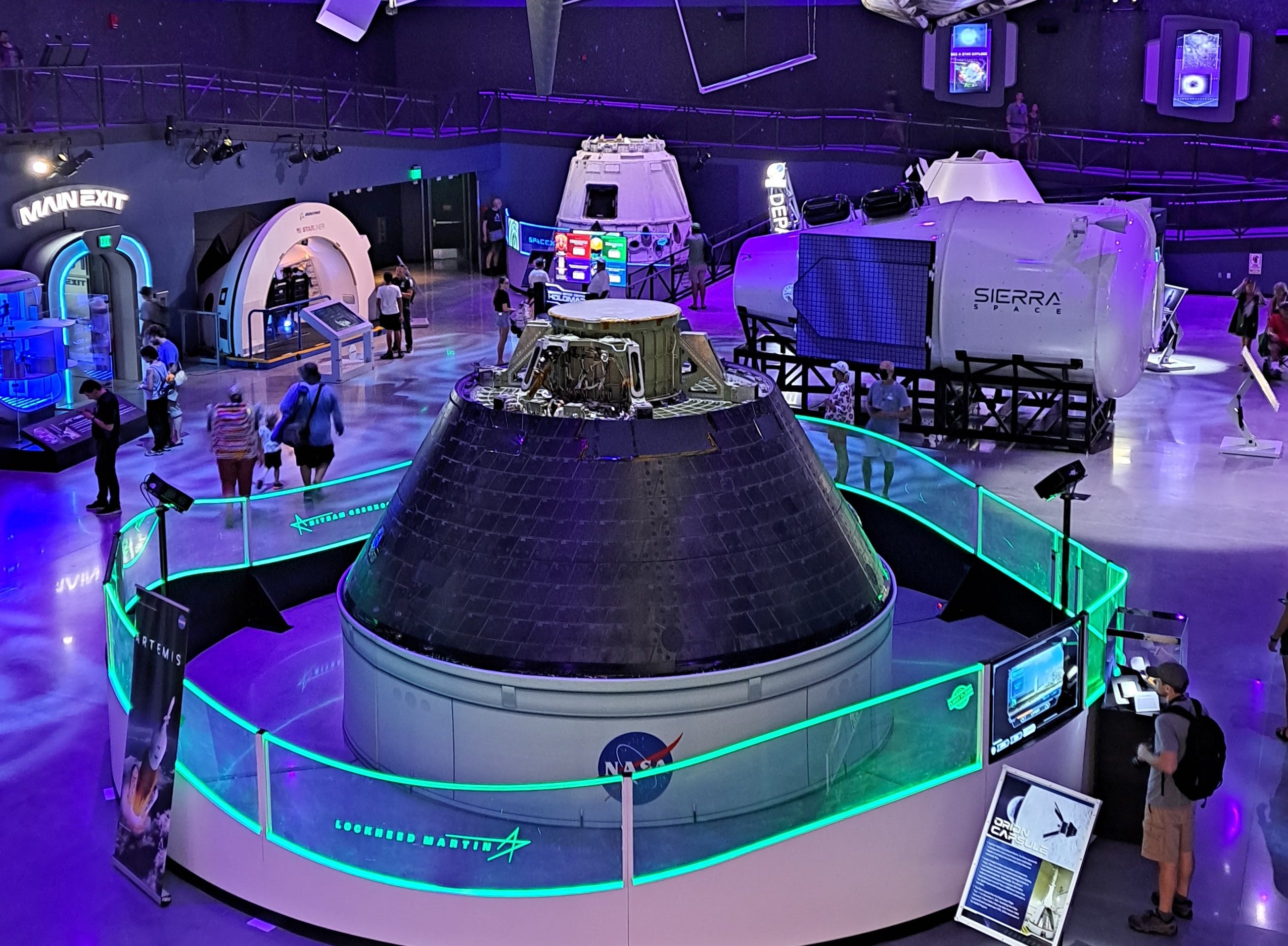
When the new launch day arrived, I headed to Kennedy early again, although liftoff was set for mid-afternoon. I returned to the viewing area well in advance and toured the Apollo/Saturn V Center again, this time pausing to absorb more of the amazing displays, exhibits and historic artifacts from the Apollo program. As the launch time came closer, I was back outside watching and waiting. The fuel tanks were being filled again and . . . oh no! Another hydrogen leak, and even worse this time.
Later, I read a few crack comments online that accompanied a livestream of the event:
Try rubbing the leak with a bar of soap . . . How about duct tape . . . I’ll give them five bucks for it . . . Have they tried turning it off and on again? . . . Hire a plumber!
Soon, the deal was up and the second launch attempt of Artemis I was scrubbed. The rocket needed a bigger fix. This meant no more launch attempts anytime soon. I spent the rest of the day frolicking like a ten-year-old exploring the Kennedy Space Center’s many displays and amusements, including a simulated flight to Mars. It was so much fun I did it three times.
I caught my return flight home, unsure when there might be another launch attempt. But within a couple of weeks, NASA was confident the problem had been solved. They set a new date, September 27th. My ticket was still good and I debated whether to fly out there again. I heard Tom’s voice in my head, It could be delayed for months. So I dilly-dallied.
As it happened, a tropical storm near Jamaica was building toward a full-blown hurricane tracking toward Florida. NASA was fidgeting over whether to roll the SLS back to the VAB or leave it on the pad. Moving the thing around is risky business. But so is a hurricane. Exposed on the pad, the rocket could withstand wind gusts of 70 mph, but not continuous high winds. When the hurricane forecast upticked to a Level 2 OMG, the launch was called off and the SLS was moved PDQ back to the VAB.
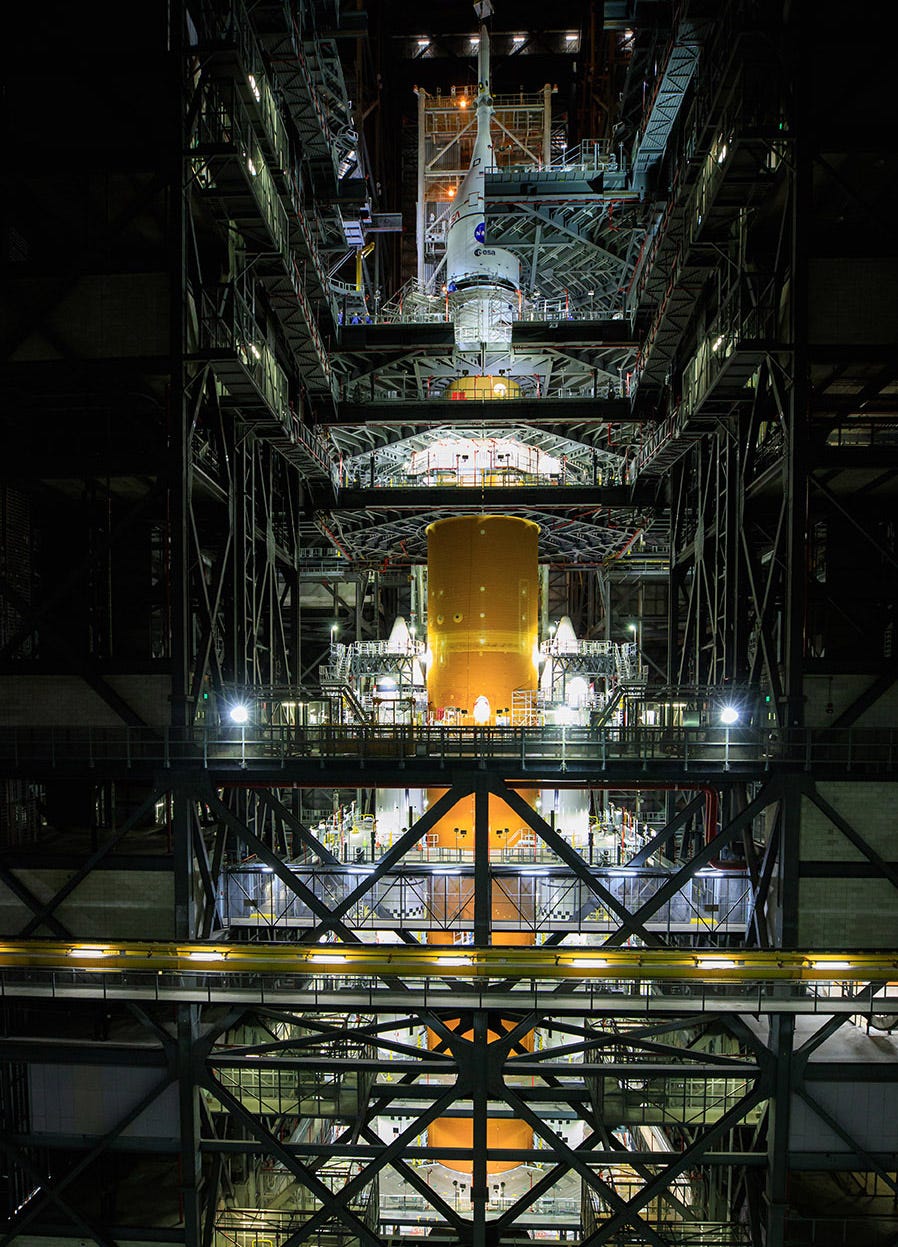
The storm intensified into Hurricane Ian, a Category 5 storm that would end up being the deadliest to hit Florida in over 80 years. The destruction was widespread, especially along the Gulf Coast. The storm also passed over the Kennedy Space Center with wind speeds aloft over 100 mph, though much less at ground level. Fortunately, the VAB was bombproof, and NASA reported minimal damage at the pad.
As for the next new launch date, some guessed October, others November. At this point I was dubious about flying to Florida again for another uncertain rocket launch. However, a couple of weeks after the storm, I’d noticed an ad looking for people to assist FEMA with home inspections to survey damages from the hurricane and assist Florida residents with recovery. It was certainly a worthy cause. I had some down time, so I signed up.
I was sent to Texas for a few days of training, then on to Orlando to get to work. Maybe I’d get lucky and be there for an October launch date as well? As it turned out, I entered the FEMA system near the end of the deployment and would not be inspecting any homes. (My assignments turned out to be, as best I could tell, some of the attempted frauds by mysterious persons who thought they could fake an address and cheat the system.) Then the news came that the launch was being pushed to November. Again, I returned home with no rocket launches to brag about.
NASA finally announced they would try again for a nighttime launch on November 16th. The Kennedy Space Center promised it would continue to honor the tickets purchased way back in August. Rob said his spare room was still available. Summer was long over in Bellingham and it was flowered-shorts weather in Florida. So against my better judgement, I booked another flight to Orlando and was back there again on the 15th. Would a third time be the charm? It’s a big deal to roll a 300-foot rocket in and out of the VAB, so one would think they’d have the problem totally resolved by now.
I was inside the gates at Kennedy by 7:30 pm. The launch window would open just after 1:00 am. I returned to the Apollo/Saturn V Center in the dark and wandered out to the edge of the grass at a break in the shrubbery where I had a clear view of the rocket. People were still arriving, many carrying cameras with tripods and expensive lenses. I had my cell phone, though I didn’t plan to record the launch. I wanted to experience it fully and not be distracted. There would certainly be high quality video of the event online after the launch, far better than anything I could possibly capture.
As we waited, I noticed the red glow of Mars levitating high above Launch Pad 39B. How perfect is that? The Artemis program was designed to first take humanity to the Moon, then perhaps by the mid-2030s on to Mars. That humans might pull this off is pretty historic stuff. In three weeks it will have been 50 years since Gene Cernan became the last man to set foot on the Moon in 1972, the same year the Mariner 9 spacecraft photographed 85 percent of the surface of Mars. One still marvels at the nuts-and-bolts technology that powered those majorly ambitious missions to success.
And now, on a pleasant Florida evening, if the sight of Mars high above Artemis wasn’t enough, right around midnight a third-quarter Moon began to rise brightly above both Artemis and the Atlantic. They could not have choreographed it any better.
By 1:00 am, there had been a few more hiccups that put the countdown on hold, but apparently nothing major this time, or so we hoped. I stood at the fence, afraid to move at the risk of losing my front-row patch of grass. I figured the odds for a launch were now pushing 50-50, so for all of us, there was no choice but to wait and see. If this launch too was scrubbed, I don’t know that I’d make the trip again. The back-and-forth to Orlando was getting to be a bit much, even with the bargain airfares I’d tracked down.
The crowd awaited the final countdown. Lit up by flood lights, the SLS glowed quietly in the distance. Either it was going to fizzle again at this iconic place or it was about to make history. Apollo 10 and the ill-fated Challenger Shuttle had launched from the same pad, 39B. (Apollo 11 and the final Columbia Shuttle launched from the nearby Pad 39A.)
By 1:30 am, anticipation was riding high and we were all glued to the voice on the public address system. A cheer went up when we learned that leaks were no longer an issue. Everything was a “go.” The clock ticked down the final 15 minutes, and the humans soon handed off control of the rocket to the computers. Is it finally happening? The countdown clock seemed a little confused in the final minutes and the crowd was left guessing how close we were to T-minus 10. People were eager to yell out the traditional “10, 9, 8 . . .” Then finally there it was, and a thousand voices screamed 6, 5, 4, 3, 2, 1 as a very bright flame burst from the engines. Liftoff!
The rocket, however, was utterly silent.
Two minutes before, I’d decided to hit record on my phone and just held it up in front of me, balanced on the fence so I might at least catch the audio and not have to look at it. What hadn’t occurred to me was that the sound would take a full 15 seconds to reach us. But when it came, wow.
The short video (below) turned out better than expected, good enough for an amateur and a memory, but I’ll let you judge. I highly recommend ear buds or a quality sound system cranked up a bit, to enjoy more fully the thundering roar that I experienced.
The cheering just before the end of the video is in response to the rocket passing through the Max Q threshold, where maximum dynamic forces of speed and air pressure let you know whether you hired the right engineers to keep your rocket from disintegrating. Artemis I passed this early test at over 1,000 mph at T+1:10.
Here’s my imperfect video of the Artemis launch.
Barely two minutes into the flight, the SLS was already traveling over 3,000 mph when the solid rocket boosters, recycled from the Space Shuttle program, separated from the core stage. Each had burned more than 1.2 million pounds of propellant in those two minutes. For lay people like me, that’s about one tanker truck full of fuel going up in smoke every second, times two. Not smoke exactly since the fuel is based on oxygen and hydrogen, not carbon fuels like methane. (Yes, these buggers do contribute to climate change, but the impact of Artemis by itself, I’m told, is relatively minor. However, the increasing rate of chemical rocket launches by SpaceX and others has elevated the concern.)
At 8.5 minutes, the core stage shut down and separated from the rest. After an hour and a half, the precious chunk still flying and carrying the Orion capsule lit up for a translunar injection, meaning it was on its way to an orbit around the Moon. For the next 24 days, the mission would entail a variety of tests, wide orbits of the Moon, the return to Earth and splashdown. Artemis I completed its journey and was widely regarded as a resounding success, despite the several false starts.
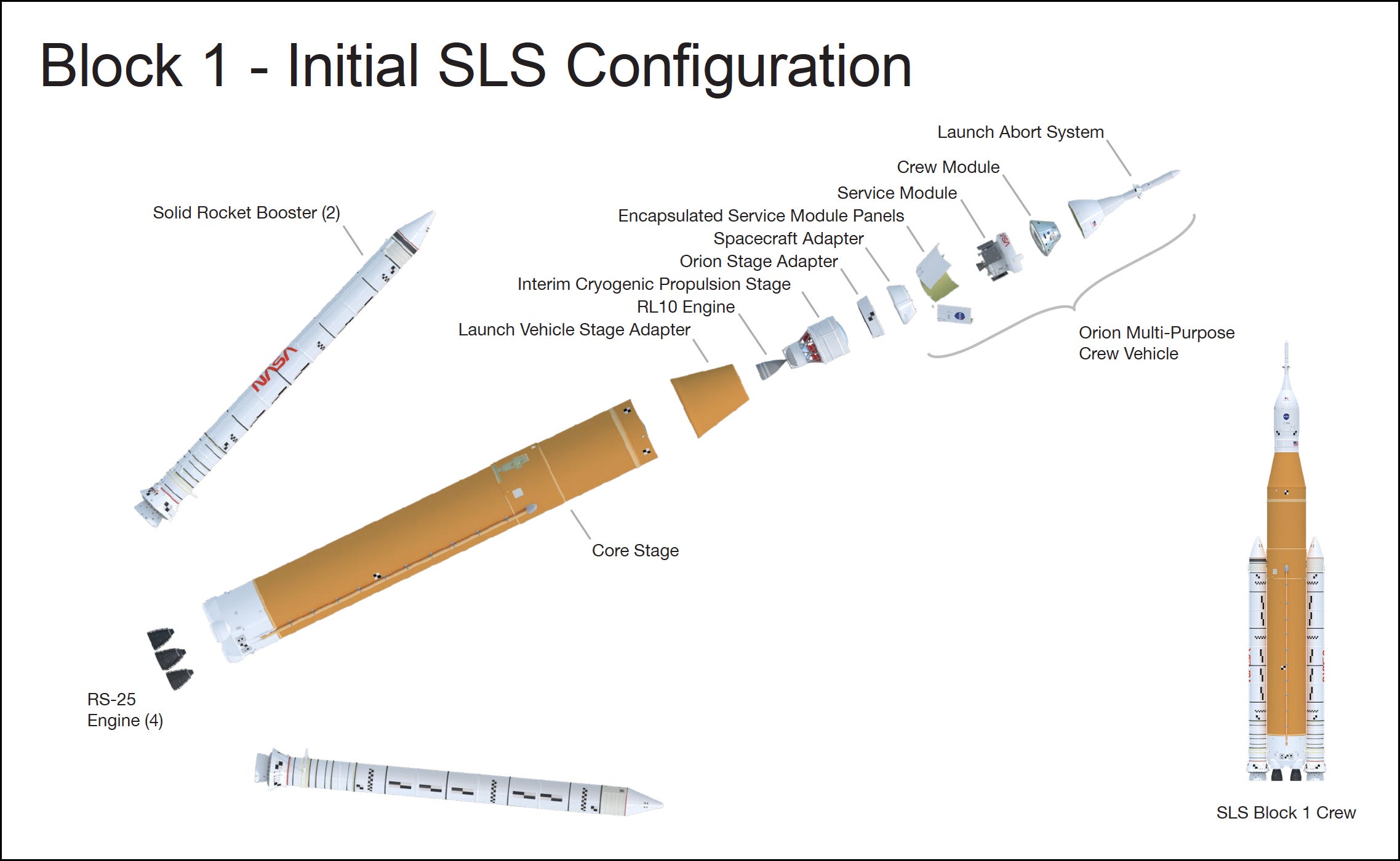
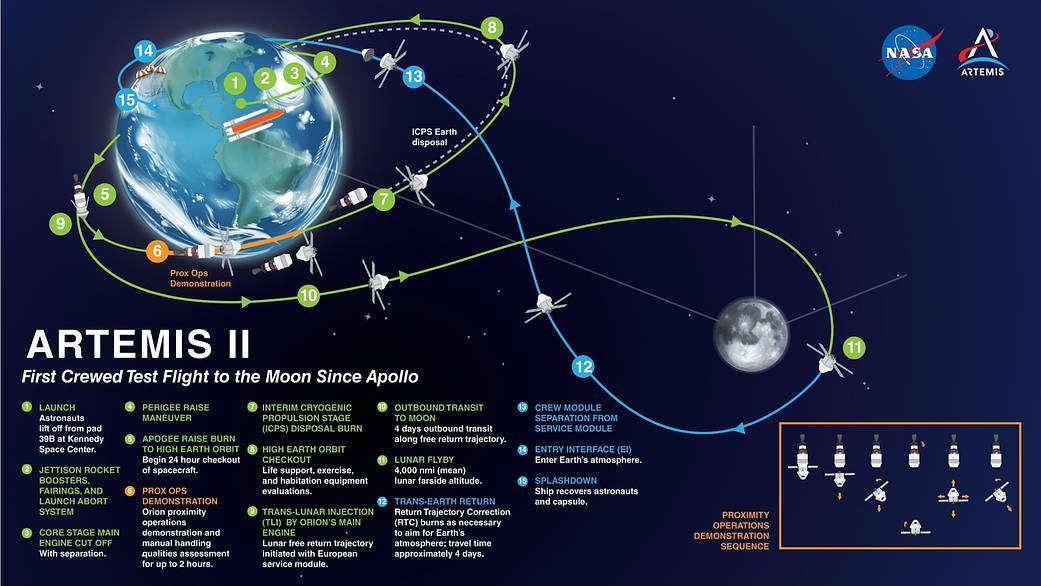
Now comes Artemis II, almost three and half years later. This time with four astronauts aboard, thus raising the stakes considerably. There are worries of course, even some disagreement over the integrity of the heat shield when Orion reenters the atmosphere 10 days after launch. But NASA insists all is well, that concerns were addressed and safety protocols have been met.
The 10-day mission will carry the first woman, first person of color and first non-U.S. citizen to the Moon and back. An actual landing on the Moon is reserved for a future mission. As of now (late March), the launch of Artemis II is set for no earlier than 6:24 p.m. on April 1st. I’ll be watching, but also giving it a 50-50 chance of at least a brief delay.
If it’s as successful as Artemis I, I’ll be pulling out my map of Mars again—not to imagine some billionaire’s mad dream of building cities on the red planet, but rather to plan my first backpacking adventure in the next red-rock paradise. Speaking of which, I’ll be off to Southern Utah soon and I’d better start packing!